Our Teachers
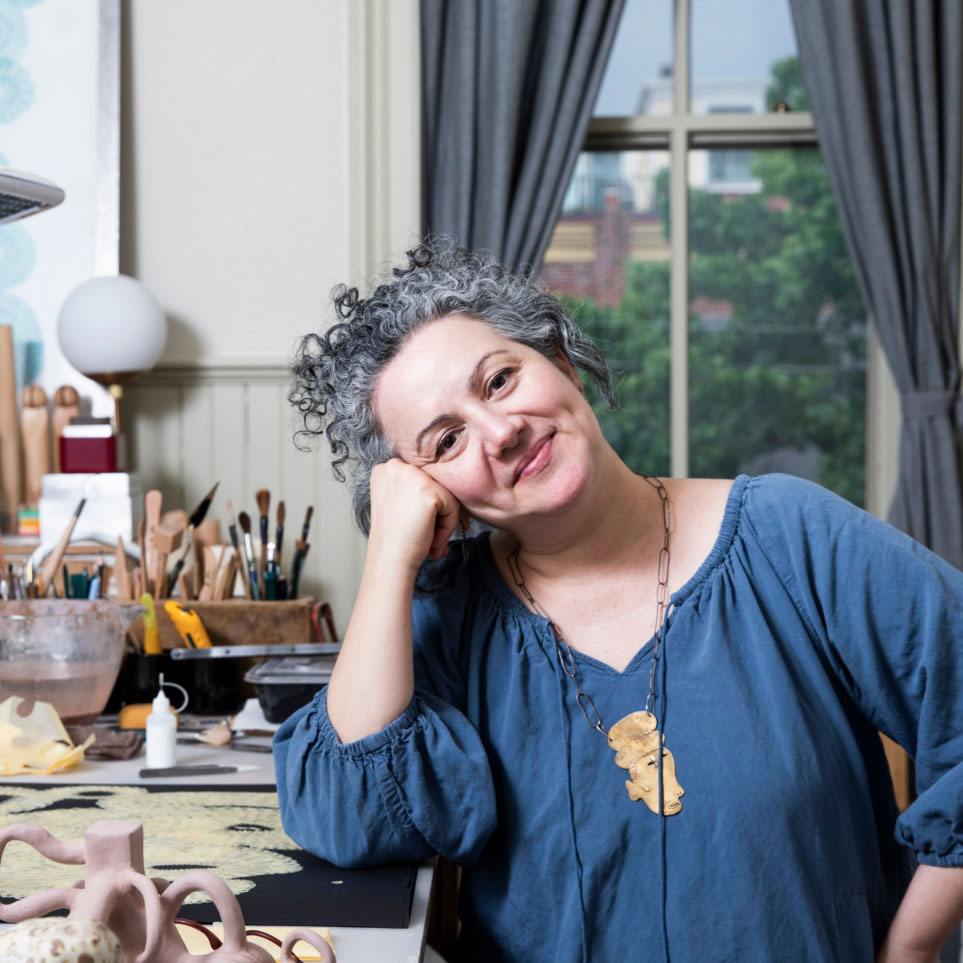
Elsa Mora
www.elsamora.net
@elsamorainstant
Elsa Mora is a celebrated artist, curator, and educator. She is a recipient of the UNESCO-Aschberg Bursaries for Artists. Through the use of various materials, including paper, clay, and fiber, her work explores universal themes of identity, connectivity, and survival.
Mora’s art has been exhibited in galleries and museums worldwide. She taught at the Vocational School of Arts in Camagüey, Cuba, and has served as a visiting artist at institutions such as the Art Institute of Chicago, San Francisco State University, the Art Institute of Boston, the MoMA Design Store, and the National Gallery of Art, among others.
Her work is part of the permanent collections of the National Museum of Women in the Arts in Washington, D.C., the Long Beach Museum of Art in California, and the Jordan Schnitzer Museum of Art at the University of Oregon. Mora has collaborated as an illustrator with several organizations, including the Museum of Modern Art, Chronicle Books, The New York Review of Books, Penguin Random House, The Oprah Magazine, Cosmopolitan, and teNeues.
In 2016, Mora co-founded ArtYard with Jill Kearney, where she served as artistic director and curator until 2024. Also, in 2024, she co-founded Mudtown, where she enjoys experimenting with clay and fostering a vibrant community of artists.
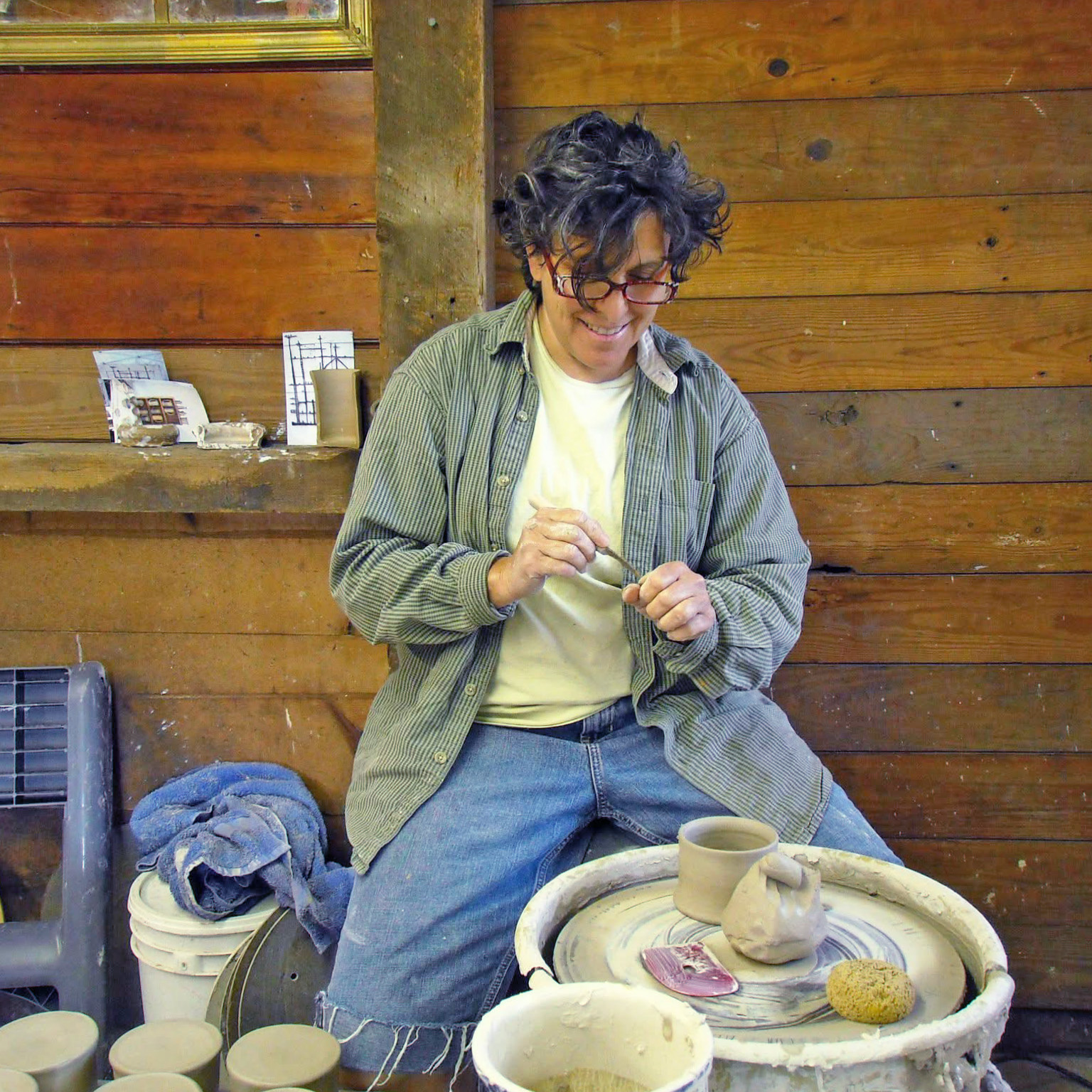
Gloria Kosco
@gloriakosco
Gloria Kosco, who began making pottery as a teenager, is an accomplished artist working with different materials but is continually drawn back to clay. She is renowned for her exceptional skills in wheel throwing. With an MFA from the Rhode Island School of Design, she has continued her studies at The Moravian Tileworks in Doylestown, PA, and Penland School of Crafts in North Carolina.
Gloria is captivated by the interplay of form and function in three-dimensional art. Over the years, she has honed her technique, mastering the throwing wheel to create beautifully crafted pottery that marries elegance with practicality. Her work often reflects a deep connection to nature, drawing inspiration from organic shapes, textures, and colors. Gloria believes that pottery is not just about the final piece but also about the joy of the creative process. She embraces the challenges of working with clay, finding beauty in both the successes and the occasional mishaps that come with it.
In addition to creating her art, Gloria is dedicated to sharing her knowledge and love for ceramics with others. She conducts workshops and classes, encouraging students to explore their creativity and develop their unique styles. Her warm and approachable teaching style has made her a beloved figure in the local arts community.
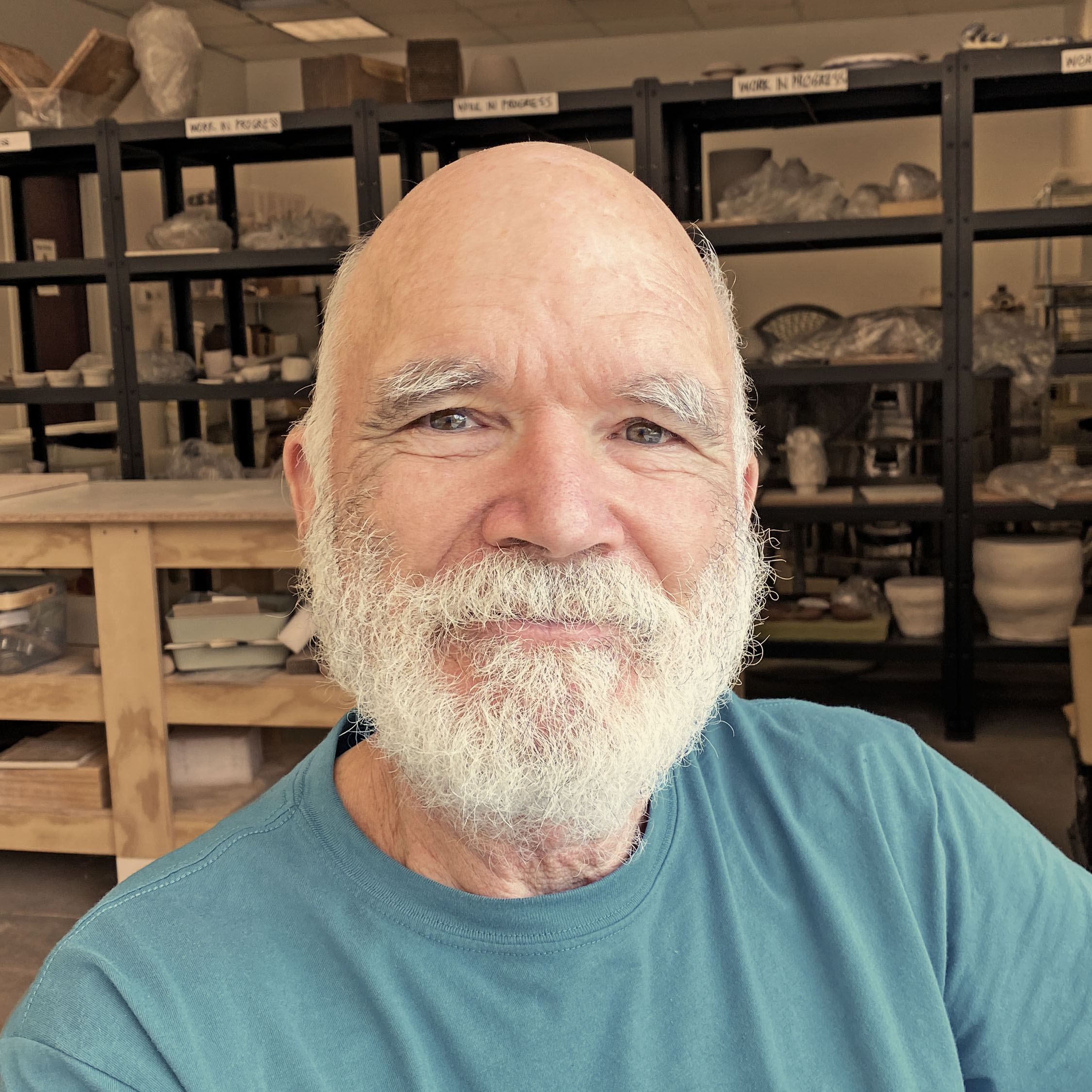
Tom Thomas
Tom Thomas is a passionate professional gardener and a talented ceramic artist best known for his whimsical and captivating gargoyles. With a deep love for the natural world, Tom spends his days nurturing lush gardens where vibrant flowers, herbs, and unique plants thrive under his care. These green sanctuaries not only serve as a source of inspiration for his artistic creations but also reflect his belief in the beauty of nature.
In the realm of ceramics, Tom has carved out a niche for himself with his gargoyle and other imaginary creature sculptures. Each piece embodies his attention to detail and playful approach to art. Blending the ancient tradition of gargoyle-making with contemporary techniques, Tom captures the intricate features and expressions that bring these fantastical creatures to life.
Tom’s dual passions complement each other perfectly; the serenity and beauty of the garden fuel his creativity, while his sculpting enhances the enchanting atmosphere of his outdoor space. Through his work, he invites others to appreciate the magic that can be found in both nature and art, making his creations not just decorative pieces but conversations that spark wonder and joy.
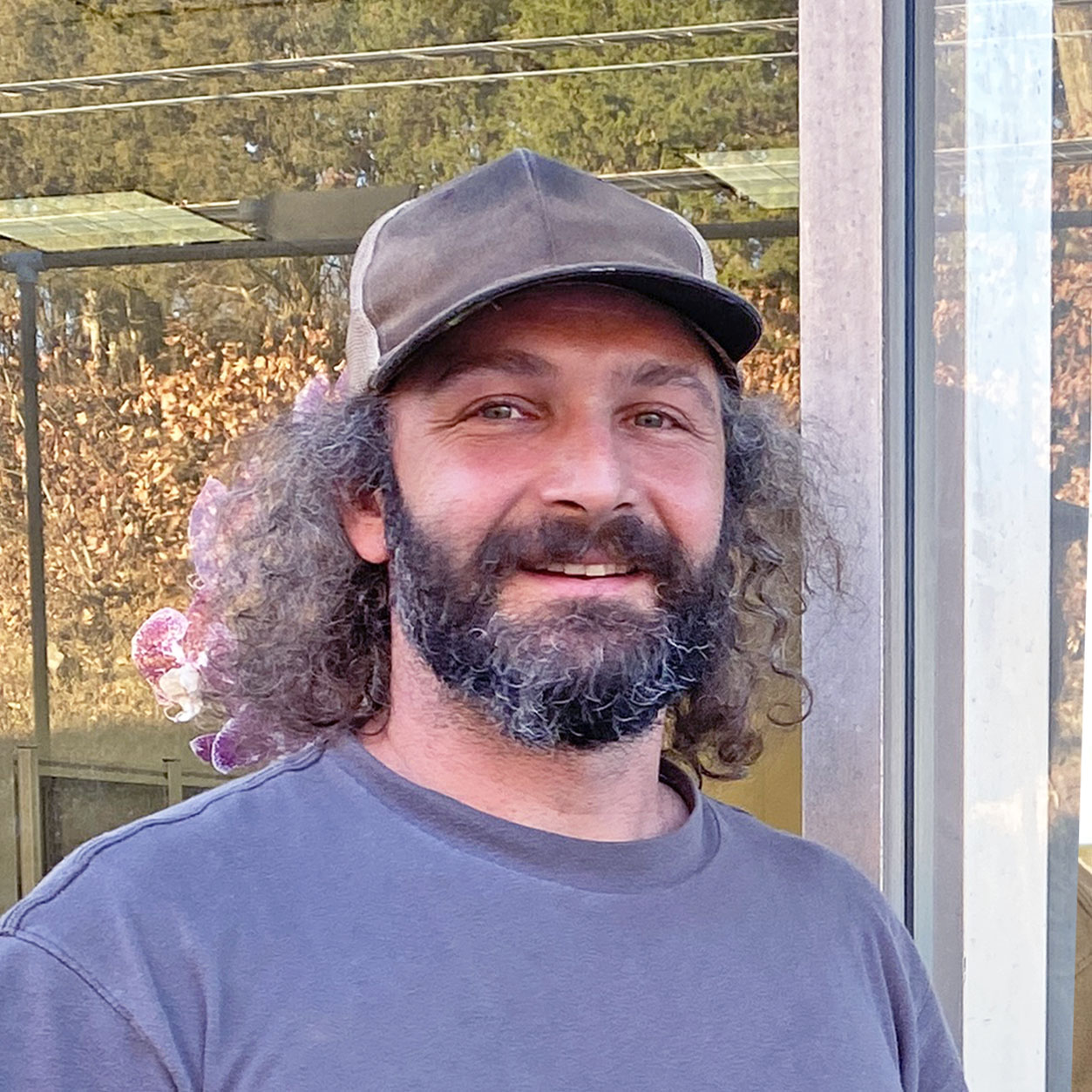
Mike Panella
@wildlifecreativgen
Mike Panella is a talented artist who has been working with clay and glass for over two decades. His journey in ceramics began during his high school years as a teenager. He apprenticed with an artist who specialized in wood-fired anagama kilns, where he developed his unique work style. Without an anagama kiln of his own, he continued to throw pots and fire electric kilns at home. Mike’s experience in ceramics eventually led him to glassblowing, and he believes his knowledge of clay has enhanced his skills in glass. Panella states, “Glass and ceramics exist with each other. Glass is glaze, melted in a ceramic pot.”
Drawing inspiration from the natural world, Mike finds beauty in the intricacies of nature, which often influences his creations. He has a passion for learning and experimenting, constantly pushing the boundaries of his art by exploring new techniques. Mike is known for digging clay from riverbanks and firing pots in a campfire. He learned and practiced this approach, along with various primitive survival skills, at Tom Brown Jr.’s Tracker School, where he worked and studied for ten years.
Whether shaping clay into surprising forms or transforming glass into intriguing pieces, Mike’s work reflects his deep appreciation for the environment and his adventurous spirit. Through his art, he invites others to join him on a journey of discovery and creativity.
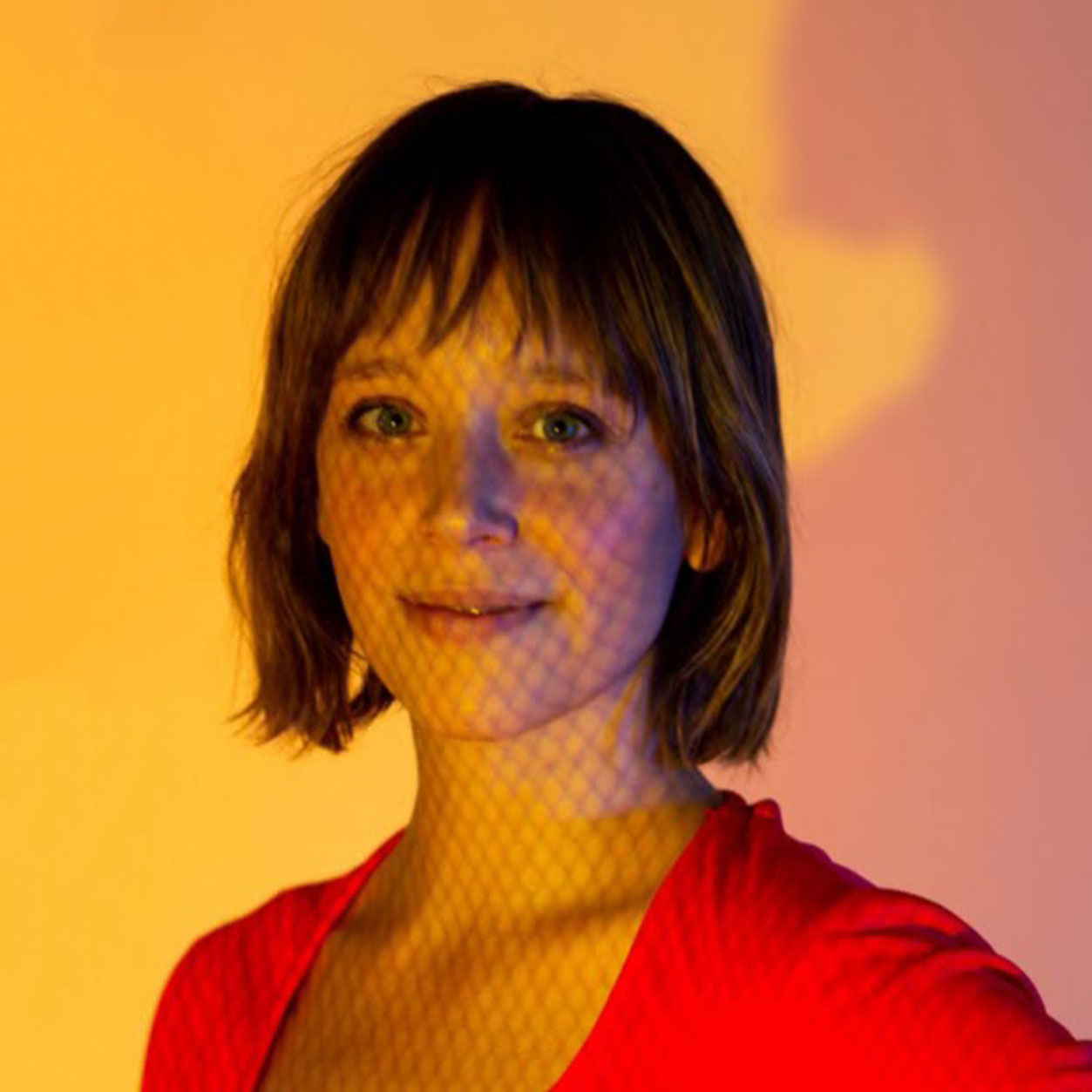
Emily Loughlin
www.emilyloughlin.com
@_emilyloughlin
Emily Loughlin is an interdisciplinary sculptor and designer based in Stockton, New Jersey. Her practice draws on research into the world’s longest-lived organisms, mapmaking, and geologic time. Using ceramics as her material “home base,” Emily’s sculptures and light fixtures incorporate a range of materials with radically different lifespans, including textiles, mycelium, and living plants.
Currently a Fireline Fellow with Oregon State University, Emily has completed residencies at Wheaton Arts Center, Artshack Brooklyn and Friends of Pando, where she collaborated with scientists and researchers to build a body of work inspired by the world’s largest tree. Her works have been displayed at the Brooklyn Museum, Amos Eno Gallery, Peters Valley, Automat Collective, Mudflat Studio, and Lipscomb University, among others. Emily holds a BA in Sculpture from Sarah Lawrence College.
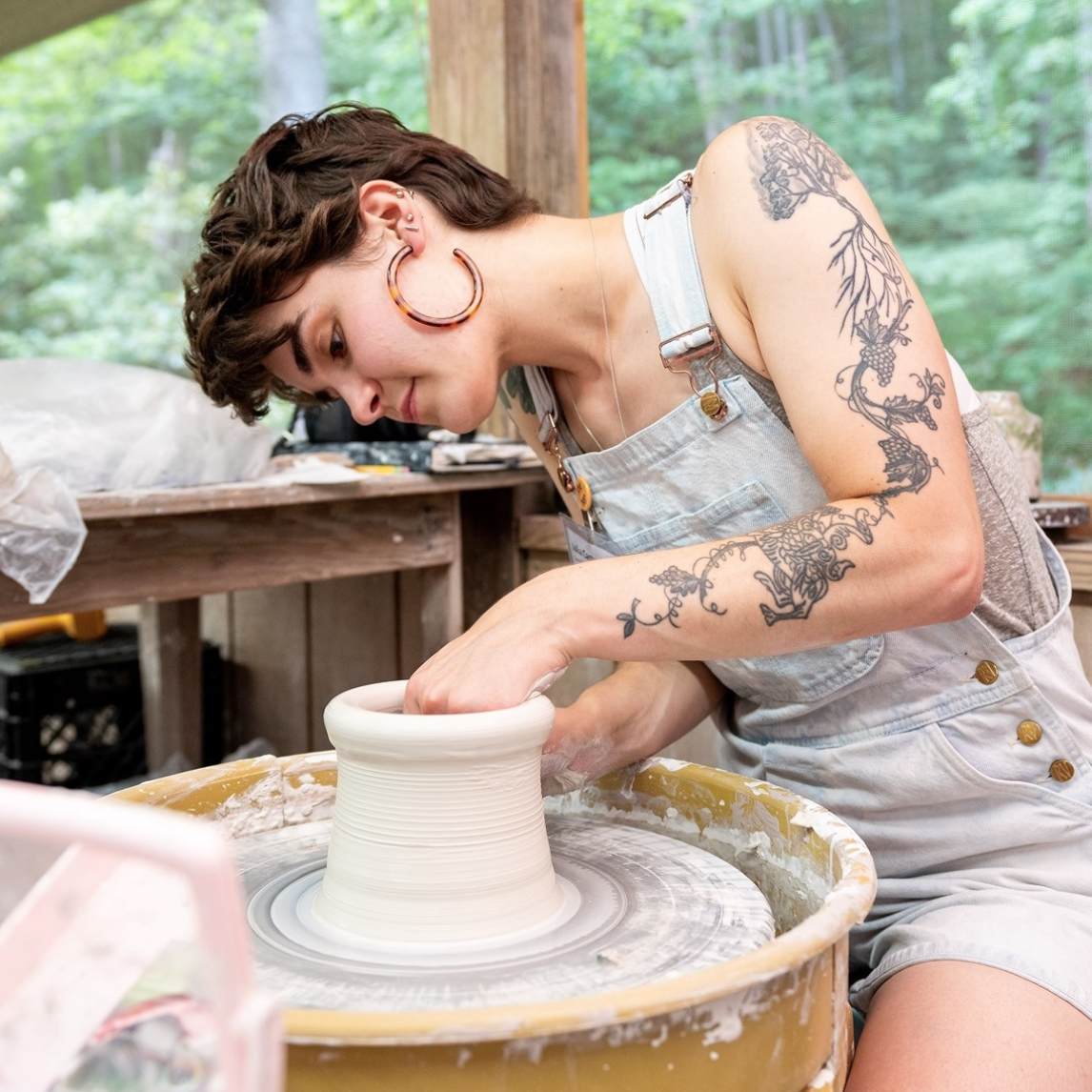
Julia Castor is an artist from Bucks County, PA, specializing in painting and ceramics. She attended the Chocheli Atelier, where she received an education in art history and classical drawing and painting techniques. She is currently studying to become an iconographer, working in the traditional and ancient medium of egg tempera to make images for religious and devotional use. Julia began working in clay while in high school, attending a local studio where she was mentored by sculptor and ceramicist Penelope Fleming.
Largely self-taught and directed in clay, she went on to take as many workshops and classes as possible with various ceramic artists to broaden her knowledge. Julia pursued her interest in ceramics as an intern for two seasons at Touchstone Center for Crafts. She then undertook a woodfire apprenticeship at Touchstone, under potter Daniel Tomcik, which was funded by the Studio Potter apprenticeship grant.
Julia currently operates out of a small studio in Chalfont, where she takes commissions and supplies local businesses with her work. Julia has taught many workshops in both painting and ceramics, and currently teaches art and art history at St. Mark’s Classical Academy in Jenkintown, PA. Her work can be found throughout Pennsylvania and the East Coast in a variety of shops, galleries, and showcases.
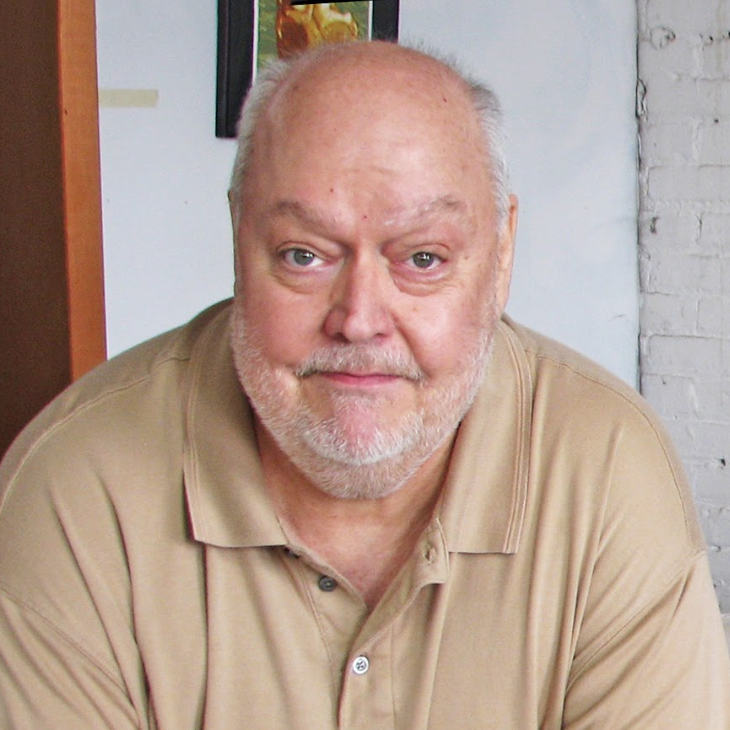
Jerry Bennett
www.jerrybennett.net
@jerry_bennett_pottery
Jerry Bennett is currently an active studio artist in the Philadelphia area and runs the Two Rivers Studio. He received his M.F.A. from Indiana University in Bloomington, Indiana, in 1975, and has given workshops and lectures at over fifty colleges, schools, and art centers throughout the USA Jerry recently led the Second International Paper Symposium in Kecskemet, Hungary.
Porcelain Paper Clay is Jerry’s medium. His work explores form, texture, and pattern, as they interact with light in translucent porcelain. Using very thin, high-fired porcelain, he forms each piece individually by hand-building and painting the surface with engobes or colored clay, then hand-painting and firing it under a clear glaze. No attempt is made to make the floral pattern look realistic or life-like. The pattern, color, and line are the important parts of the decoration.
By mixing fibers with wet porcelain, he has been exploring very thin, highly textured surfaces. This technique allows for numerous unique visual opportunities. The challenge is to make modern objects that reflect this contrasting view of traditional forms with a unique material.